

Desa Wisata Sukawati
In ages long past, the land now known as Sukawati Village was but a swelling wilderness called Hutan Timbul—a forest rising in lush abundance, wrapped in mystery and shadow. As recounted in the ancient chronicle Babad Timbul Sukawati, the tale of how this untamed woodland transformed into the village of Sukawati unfolds thus:
Around the eighteenth century, a region under the dominion of the Kingdom of Mengwi—comprising clusters of rural enclaves such as Cahu Pegambangan, Abasan, Langge, and Laud—was struck by a dreadful pestilence known as “gring grubug.” The scourge swept through the land like a merciless tempest, claiming lives beyond counting and cloaking the countryside in sorrow.
This calamity was believed to have been wrought by the dark mystic force—Pangrista—a baleful spiritual power wielded by Ki Balian Batur, a sorcerer who dwelled deep within the forest of Teledu Nginyah, also called Karang Kadangkan. He was said to descend from the lineage of Sengghu Wintang Danu, a family rooted in the sacred valley of Lake Batur. From his hidden hermitage amidst the tangled woods, Ki Balian Batur unleashed his arcane arts, and the people trembled beneath the shadow of his unseen hand.
In desperation, the King of Mengwi petitioned the Dalem for deliverance. The plea was graciously granted. Thus was dispatched the royal prince, I Dewa Agung Anom, entrusted with a sacred charge: to end the life of Ki Balian Batur. Armed with the revered heirloom weapon, Ki Sliksik Narantaka, the prince set forth upon his solemn quest.
The tale hastens to its fateful end—Ki Balian Batur fell, together with his kin and loyal followers, vanquished by the might of royal decree and sacred steel. With his demise, the dark pall that had hung over the land was lifted, and from the ashes of fear and affliction arose a new beginning.
Thus did Hutan Timbul yield to destiny, and from its depths emerged the village of Sukawati—a place reborn from tribulation, shaped by legend, and sanctified by history.
The Location of Sukawati Village
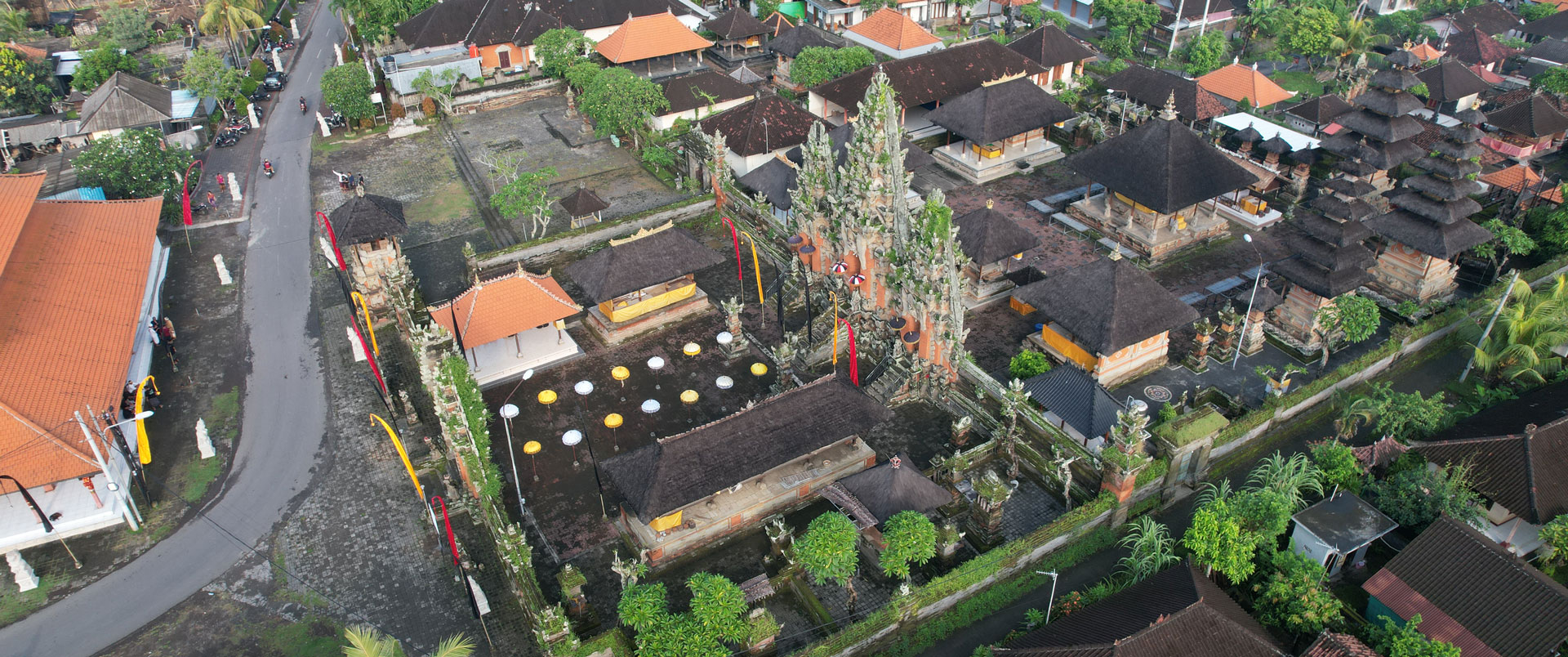
The Tourism Village of Sukawati rests gracefully within Sukawati District, in the regency of Gianyar Regency, upon the sacred island of Bali. It lies at a gentle elevation of approximately 100–200 meters above sea level, poised between earth and sky as though cradled by nature’s careful hand.
This flourishing village is composed of 13 administrative banjar and 14 traditional banjar adat, each a living thread in the rich tapestry of its community life:
Br. Gelumpang
Br. Telabah
Br. Palak
Br. Tebuana
Br. Delod Tangluk
Br. Babakan
Br. Gelulung
Br. Kebalian
Br. Delod Pangkung
Br. Tameng
Br. Bedil
Br. Pekuwudan
Br. Mudita
Sukawati is embraced by neighboring villages that frame it like guardians at the four winds: to the north lies Batuan; to the east, Saba; to the south, Guwang; and to the west, Celuk—each village contributing its own color and character to the surrounding landscape.
Access to Sukawati is remarkably convenient, for its location is most strategic. From the vibrant heart of Denpasar, the distance is approximately 17 kilometers, while from the cultural haven of Ubud it is about 14 kilometers. By motorbike, the journey unfolds in a mere 25 to 30 minutes, whether one travels from Denpasar’s bustling avenues or Ubud’s serene, art-laden streets.
The topography of Sukawati stretches gently from north to south in harmonious alignment with the Balinese sacred concept of hulu and hilir—the spiritual axis of upstream and downstream, mountain and sea. To the east, the village is bordered by the flowing waters of the Petanu River, while to the west it is embraced by the Wos River. Though cradled by these natural boundaries, the village remains well connected, with village roads that are in fine condition, weaving gracefully through the settlement like silver threads.
Thus stands Sukawati—accessible yet serene, grounded in tradition yet open to the world—a village where geography and culture unite in quiet splendor.
Its People
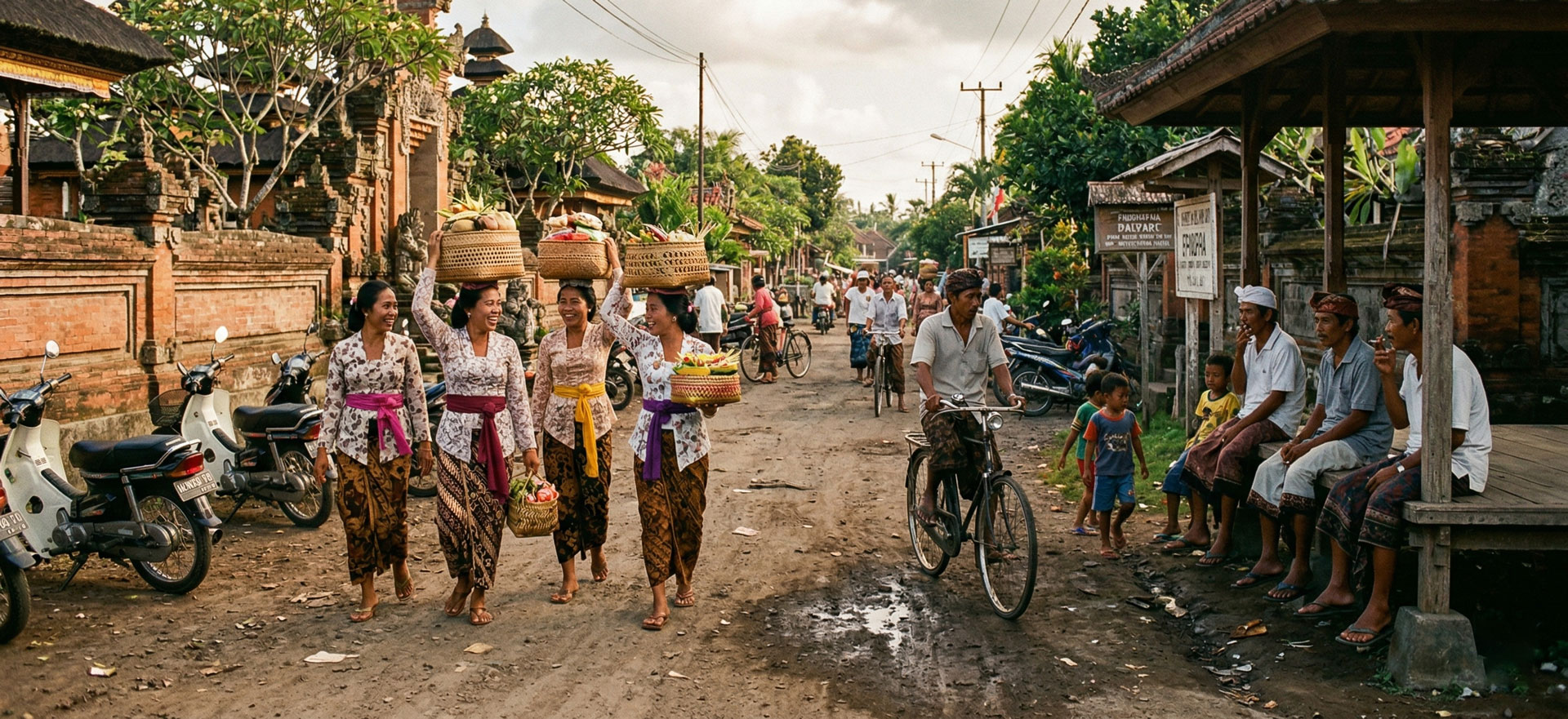
The people of Sukawati Village dwell upon land that has long been agrarian at heart—a fertile realm where emerald rice fields sway beneath the sun, and the rhythm of planting and harvest has shaped the cadence of daily life for generations. Yet Sukawati is not sustained by agriculture alone. Alongside its verdant fields flourish lively trade, humble home industries, devoted services, and a treasury of artistic brilliance.
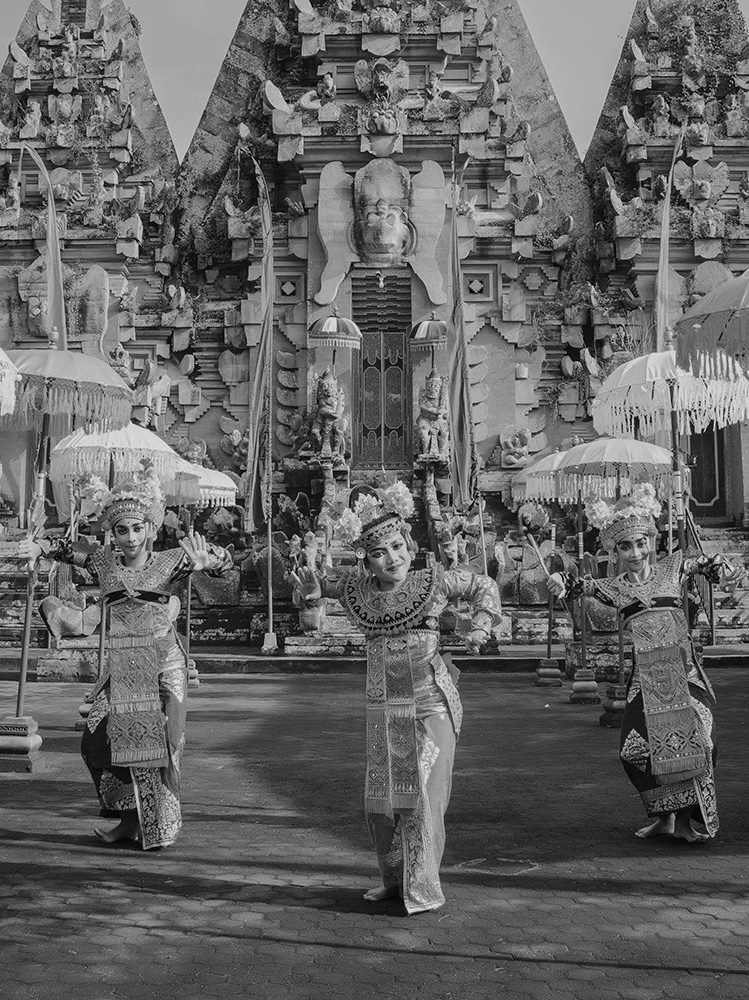
Indeed, Sukawati is richly adorned with the splendors of art: the resonant beauty of seni tabuh (traditional gamelan music), the graceful poetry of dance, the sacred storytelling of shadow puppetry, the delicate mastery of wood carving, the elegance of traditional architecture, and the refined craftsmanship of silverwork. Creativity here is not merely occupation—it is inheritance, devotion, and breath.
The structure of its society, rooted in an agrarian way of life and animated by a profound faith in Hinduism, forms the steadfast foundation of the village’s identity. Spiritual belief and communal harmony are woven inseparably into the fabric of everyday existence; temple rites, offerings, and sacred ceremonies are not interruptions of life, but its very pulse.
In more recent times, the presence of the renowned Pasar Seni Sukawati has cast Sukawati’s name far beyond the shores of Bali. This vibrant art market, alive with color and craftsmanship, has drawn visitors from across the archipelago and from distant lands overseas. Through it, the village has become celebrated internationally, known not only for its commerce, but for the living soul of culture that breathes within every carved panel, every woven textile, and every shimmering strand of silver.
Thus, Sukawati stands as a harmonious union of soil and spirit, labor and artistry—a village where tradition is cultivated as lovingly as the rice fields, and where faith and creativity blossom side by side.